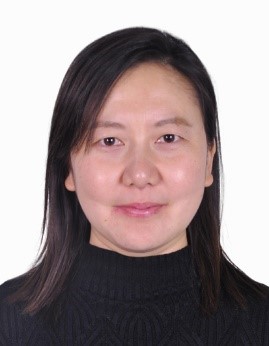
 |
Yuan Sun(孙 媛) |
Research Interest
I work in the field of Natural language processing. Currently, I focus on the following research topics:- Knowledge Graph
- Question Answering
- Relation Extraction
- Minority Language Corpus Construction
Education
- 2002.9-2007.6 Ph.D. in Institute of Automation, Chinese Academy of Sciences.
Work Experience
- 2019.3-2020.3 Visiting Scholar, Institute of Automation, Chinese Academy of Sciences. Supervisor: Chengqing Zong, Professor
- 2022-present Professor, Minzu University of China
Honors and Awards
- 2019 Guidance teacher on Excellent master thesis in Minzu University of China
- 2017 Second Prize of Excellent Social Research Project for Young Teachers in Beijing
- 2014 Beijing Young Talents
- 2014 Best paper in the 15th Conference on Chinese Minority Language Information Processing
Research Projects
- 2019 Research on Key Technologies of Tibetan Question Answering over Knowledge Base with Representation Learning and Generative Adversarial Networks. The National Nature Science Foundation of China under Grant 61972436.
- 2016 Research on Tibetan Entity Knowledge Extraction Based on Word Embedding. The National Nature Science Foundation of China under Grant 61501529.
Publications
Books:
Yuan Sun. Status Survey on Social Awareness and Usage of Tibetan New Words and Terms. Minzu University of China Press, Beijing, China, 2019.Papers:
[1] Wenhao Zhuang, Yuan Sun*. CUTE: A Multilingual Dataset for Enhancing Cross-Lingual Knowledge Transfer in Low-Resource Languages. Proceedings of the 31st International Conference on Computational Linguistics (COLING), 2025, pp. 10037–10046.
[2] Yijie Li, Yuan Sun*. EasyJudge: an Easy-to-use Tool for Comprehensive Response Evaluation of LLMs. Proceedings of the 31st International Conference on Computational Linguistics: System Demonstrations (COLING), 2025, pp. 91–103.
[3] Xi Cao, Yuan Sun*, Quzong Gesang, Nuo Qun*, Nyima Tashi. TSCheater: Generating High-Quality Tibetan Adversarial Texts via Visual Similarity. Proceedings of the 50th IEEE International Conference on Acoustics, Speech and Signal Processing (ICASSP), 2025.
[4] Yuan Sun, Yan Zhuang, Sisi Liu, Xiaobing Zhao. Tibetan Question Generation Based on Key Sentence and Knowledge Graph. ACM Transactions on Asian and Low-Resource Language Information Processing (TALLP), 2025.
[5] Zhengcuo Dan, Yuan Sun*. TibetanQA2.0: Dataset with Unanswerable Questions for Tibetan Machine Reading Comprehension. Data Intelligence, 2024.
[6] Wenhao Zhuang, Dawa Cairen, Yuan Sun*. TIFD: Tibetan Instruction-Following Dataset for Large Language Models Supervised Fine-Tuning. Data Intelligence, 2024.
[7] Pengmao Cairang, Dawa Cairen, Yuan Sun*. TiconvQA: A Tibetan Conversational Dataset for Text Comprehension. Data Intelligence, 2025.
[8] Long Chen, Yuan Sun*. Dataset Used for Reinforcement Learning Tasks of Tibetan Large Models. Data Intelligence, 2025.
[9] Jian Luo, Yuan Sun*. A Dataset of Mongolian Reward Training QA. Data Intelligence, 2025.
[10] Yijie Li, Yuan Sun*. AlpaCream: an Effective Method of Data Selection on Alpaca. IEEE International Conference on Systems, Man, and Cybernetics (SMC), 2024.
[11] Ruihui Wang, Hongying He, Yuan Sun*. Cybernetic Sentinels: Unveiling the Impact of Safety Data Selection on Model Security in Supervised Fine-Tuning. International Conference on Intelligent Computing (ICIC), 2024.
[12] Wenhao Zhuang, Dawa Cairen, Pengmao Cairang, Yuan Sun*. Tibetan-Chinese Machine Translation Evaluation Technical Report. CCMT2024.
[13] Wenhao Zhuang, Ge Gao, Yuan Sun*. TiKG-30K: A Tibetan Knowledge Graph Dataset Based on Representation Learning. The 22nd China National Conference on Computational Linguistics (CCL), 2023.
[14] Junjie Deng, Long Chen, Ting Zhang, Yuan Sun*, Xiaobing Zhao. TiKEM: Knowledge Enhanced Tibetan Pre-trained Language Model. The 22nd China National Conference on Computational Linguistics (CCL), 2023.
[15] Zhengcuo Dan, Long Chen, Junjie Deng, Xian Pang, Yuan Sun*. Difficult Question Generation of Tibetan Machine Reading Based on Data Enhancement. The 22nd China National Conference on Computational Linguistics (CCL), 2023.
[16] Junjie Deng, Hanru Shi, Xinhe Yu, Wugedele Bao, Yuan Sun*, Xiaobing Zhao. MiLMo: Minority Multilingual Pre-trained Language Model. IEEE International Conference on Systems, Man, and Cybernetics (SMC), 2023.
[17] Yuan Sun*, Sisi Liu, Zhengcuo Dan, Xiaobing Zhao. Question Generation Based on Grammar Knowledge and Fine-grained Classification. Proceedings of the 29th International Conference on Computational Linguistics (COLING), 2022, pp. 6457–6467.
[18] Sisi Liu, Junjie Deng, Yuan Sun*, Xiaobing Zhao. TiBERT: Tibetan Pre-trained Language Model. IEEE International Conference on Systems, Man, and Cybernetics (SMC), 2022, pp. 2956-2961.
[19] Sisi Liu, Chaofan Chen, Yuan Sun*. Paragraph-level Tibetan Question Generation for Machine Reading Comprehension. International Conference on Asian Language Processing (IALP), 2022, pp. 280-285.
[20] Yuan Sun*, Andong Chen, Chaofan Chen, Tianci Xia, Xiaobing Zhao. A Joint Model for Representation Learning of Tibetan Knowledge Graph Based on Encyclopedia. ACM Transactions on Asian and Low-Resource Language Information Processing, Vol. 20, No. 2, Article 27, 2021, pp 1–17.
[21] Yuan Sun*, Chaofan Chen, Andong Chen, Xiaobing Zhao. Tibetan Question Generation Based on Sequence to Sequence Model. CMC: Computers, Materials & Continua, 2021, 68(3): 3203–3213.
[22] Yuan Sun*, Sisi Liu, Chaofan Chen, Zhengcuo Dan, Xiaobing Zhao. Construction of High-quality Tibetan Dataset for Machine Reading Comprehension. The 20th China National Conference on Computational Linguistics (CCL), 2021.
[23] Yuan Sun*, Chaofan Chen, Sisi Liu, Xiaobing Zhao. Ti-Reader: An End-to-End Network Model Based on Attention Mechanisms for Tibetan Machine Reading Comprehension. The 20th China National Conference on Computational Linguistics (CCL), 2021.
[24] Yuan Sun*, Jiaya Liang, Andong Chen, Xiaobing Zhao. JCapsR: A Joint Capsule Neural Network for Tibetan Knowledge Graph Representation Learning. The 20th China National Conference on Computational Linguistics (CCL), 2021.
[25] Like Wang, Yuan Sun*, Sisi Liu. Tibetan Entity Relation Extraction Based on Multi-level Attention Fusion Mechanism. Chinese Journal of Intelligent Science and Technology, 2021, 3(04): 466-473.
[26] Yuan Sun*, Sisi Liu, Tianci Xia and Xiaobing Zhao. An End-to-End Method for Joint Extraction of Tibetan Entity Relations. Journal of Computer and Communications, 2021, pp. 132-142.
[27] Yuan Sun*, Jiaya Liang, Pengchao Niu. Personalized Recommendation of English Learning Based on Knowledge Graph and Graph Convolutional Network. International Conference on Artificial Intelligence and Security, 2021.
[28] Like Wang, Yuan Sun*, Tianci Xia, Distant Supervision for Tibetan Entity Relation Extraction. Journal of Chinese Information Processing, vol. 34, no.3, pp. 72-79, 2020.
[29] Yuan Sun*, Chaofan Chen, Tianci Xia, Xiaobing Zhao. QuGAN: Quasi Generative Adversarial Network for Tibetan Question Answering Corpus Generation. IEEE ACCESS, vol. 7, pp. 116247-116255, 2019.
[30] Tianci Xia, Yuan Sun*, Xiaobing Zhao, Wei Song, Yumiao Guo. Generating Questions Based on Semi-automated and End-to-End Neural Network. CMC: Computers, Materials & Continua, vol. 61, no. 2, pp.617-628, 2019.
[31] Yuan Sun*, Like Wang, Chaofan Chen, Tianci Xia, Xiaobing Zhao. Improved Distant Supervised Model in Tibetan Relation Extraction Using ELMo and Attention. IEEE ACCESS, vol. 7, pp. 173054-173062, 2019.
[32] Yuan Sun*, Wang Like, Guo Lili. Tibetan Entity Relation Extraction Based on Optimized Word Embedding with GRU Neural Network. Journal of Chinese Information Processing, vol. 33, no.6, pp. 35-41, 2019.
[33] Yuan Sun*, Tianci Xia. A Hybrid Network Model for Tibetan Question Answering. IEEE ACCESS, vol. 7, pp. 52769-52777, 2019.
[34] Pengchao Niu, Yuan Sun*, Wei Song, Shijiao Zhang. Evaluation Method of Teachers' Teaching Ability Based on BP Neural Network. The 5th International Conference on Artificial Intelligence and Security, New York, USA, pp. 27-38, 2019.
[35] Hao Li, Yuan Sun*, Wei Song, Jie Qin. Research on the Promotion of Tibetan New Words and Platform Design. The 5th International Conference on Artificial Intelligence and Security, New York, USA, pp. 39-50, 2019.
[36] Xia Tianci,Yuan Sun*. Tibetan Entity Relation Extraction Based on Joint Model. Journal of Chinese Information Processing, vol. 32, no.12, pp. 76-83, 2018.
[37] Like Wang, Yuan Sun*, Xiaobing Zhao. English-Chinese Cross Language Word Embedding Similarity Calculation. Artificial Intelligence and Cloud Computing Conference, Tokyo, Japan, 2018.
[38] Yuan Sun, Zhen Zhu. Template Construction and Tibetan Knowledge Extraction. International Conference on Artificial Intelligence and Big Data, Chengdu, China, 2018.
[39] Hao Li, Yuan Sun*. English Education Text Recommendation Technology based on Word Embedding. International Conference on Big Data and Artificial Intelligence, Beijing, China, 2018.
[40] Yuan Sun*, Zhao Qian. Research on the Extraction and Alignment of Tibetan-Chinese Cross-language Topics. Journal of Chinese Information Processing, vol. 31, no.1, pp. 102-111, 2017.
[41] Yuan Sun, Tibetan-Chinese Comparable Corpus Construction Based on Word Embedding an LDA Model, Journal of Residuals Science & Technology, 2016, 13(9): 271-279.
[42] Zhu Zhen, Yuan Sun*. Tibetan Person Attribute Extraction Based on SVM and Pattern. Journal of Chinese Information Processing, vol. 29, no.6, pp. 220-227, 2016.
[43] Lili Guo, Yuan Sun*. Tibetan Person Attributes Extraction Based on BP Neural Network. Chinese Computational Linguistics and Natural Language Processing Based on Naturally Annotated Big Data, Changsha, China, 2016.
[44] Yuan Sun, Zhao Qian. Tibetan-Chinese Cross Language Text Similarity Calculation Based on LDA Topic Model. The Open Cybernetics & Systemics Journal, vol. 9, pp. 2911-2919, 2015.
[45] Yuan Sun and Guo Wenbin. A Multi-Strategy Quantitative Analysis Model for Network Emergency. The Open Cybernetics & Systemics Journal, vol. 8, pp. 821-828, 2014.
[46] Yuan Sun, Wenbin Guo, Xiaobing Zhao. Tibetan-Chinese Cross Language Named Entity Extraction Based on Comparable Corpus and Naturally Annotated Resources. IEEE Symposium Series on Computational Intelligence, Rolando, USA, 2014.
[47] Yuan Sun and Guo Wenbin. Hot Word Extraction of Tibetan Internet Public Opinion. Information Technology Journal, vol.12, no. 20, pp. 5505-5511, 2013.
[48] Yuan Sun. Study on Tibetan New Word Extraction. Journal of Convergence Information Technology, vol. 8, no. 4, pp. 50-58, 2013.
[49] Yuan Sun. Research on Tibetan Automatic Word Segmentation. AISS: Advances in Information Sciences and Service Sciences, vol. 5, no. 5, pp. 726-734, 2013.
Patents
- Yuan Sun. Method of Tibetan Entity Knowledge Information Extraction (No. ZL201410310710.4).
- Yuan Sun. Method of Tibetan Entity Relation Extraction (No. ZL201510173998.X).
- Yuan Sun. Zhao Qian. A Method and System on Cross-language Topic Detection (No. ZL201610507463.6)
- Yuan Sun. Xia Tianci. A Generation Method of Low-resouce Language Question Answer Corpus (No. ZL201910501879.0)
Corpora
- Word Segmentation Corpus includes 22,600 Tibetan sentences, 100,000 Uyghur sentences, 100,000 Mongolian sentences.
- Tibetan POS Corpus includes 520,000 words.
- Tibetan Entity Relation Corpus includes 10,000 sentences.
- Tibetan Entity Knowledge Base includes 95,090 three tuples, 4,183 relations and 12,658 Tibetan encyclopedia data.
- Tibetan Question Answering Corpus includes 21,783 pairs.